
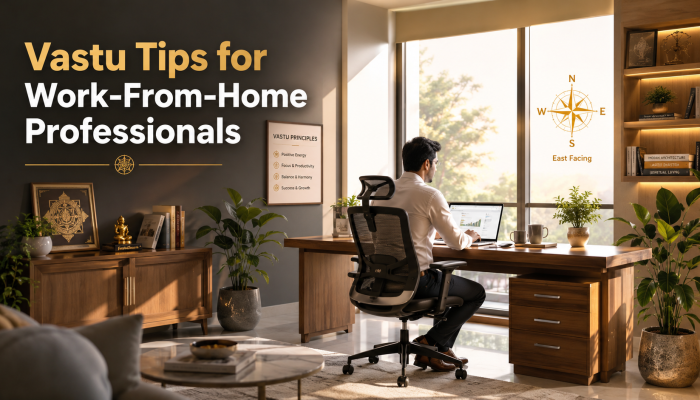
The way we work has changed significantly over the past few years. For many professionals, freelancers, consultants, business owners, and remote employees, working from home has become a long-term reality rather than a temporary arrangement.
While technology has made remote work possible, productivity doesn’t depend only on a fast internet connection or a powerful laptop. The environment in which you work also plays an important role in influencing your concentration, motivation, decision-making, and overall well-being.
According to Vastu Shastra, the placement of your workspace, desk, seating direction, lighting, and surrounding elements can create an atmosphere that supports focus and professional growth. Whether you have a dedicated office room or a small workstation in your living area, following simple Vastu principles can help create a balanced work environment.
This guide explains practical and easy-to-follow Vastu tips for work-from-home professionals without requiring expensive renovations.
A home office is more than simply a location where daily tasks are completed. It represents a professional environment where meetings are conducted, projects are managed, business opportunities are explored, and long-term career objectives are pursued.
According to Vastu Shastra, every direction within a building carries a particular type of energy. Proper placement of workstations, furniture, electronic equipment, and decorative elements helps maintain balance and creates an environment that supports concentration and efficiency. Although professional success depends on knowledge, dedication, and consistent effort, an organized workspace can positively influence daily performance by reducing distractions and encouraging a disciplined work routine.
The location of a workspace is considered one of the most important aspects of Vastu.
A dedicated home office or study room is generally regarded as the most suitable option because it creates a clear separation between professional and personal life. When a separate room is not available, a quiet corner within the living room or bedroom may also be used, provided that the area remains organized and free from unnecessary disturbances.
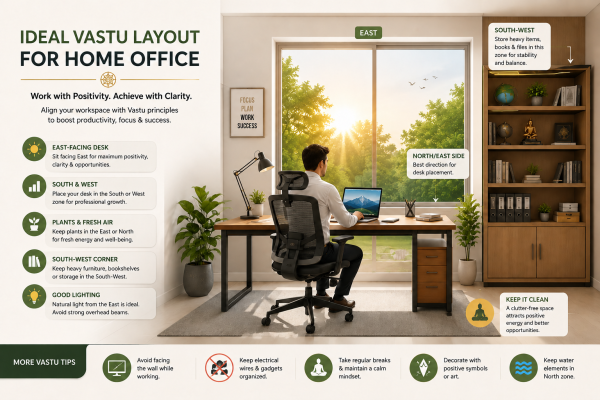
Workstations should preferably be located in the western, southern or south-western parts of the house. These directions are traditionally associated with growth, knowledge, clarity, and positive energy.
Areas located directly beneath staircases, adjacent to bathrooms, or surrounded by excessive household activity are generally considered less suitable for productive work.
The direction in which a professional faces while working is an important consideration in Vastu Shastra.
Facing east while working is believed to encourage learning, intellectual development, creativity, and better concentration. Facing north is associated with career opportunities, financial growth, and business expansion.
When possible, professionals should avoid working for extended periods while facing south. If the layout of the room cannot be changed, adjusting the position of the chair may still help align the workspace more closely with recommended Vastu principles.
The work desk serves as the central element of the home office. Its placement influences comfort, organization, and the overall working atmosphere.
A desk should ideally be positioned against a solid wall, providing a sense of stability and support. At the same time, there should be open space in front of the workstation rather than another wall placed too closely. Sitting with the back directly facing the entrance is generally discouraged because it may create unnecessary distractions during work.
The desk should provide sufficient space for essential work materials while avoiding overcrowding with unnecessary items.
Cleanliness and organization are considered essential components of both modern workplace management and Vastu Shastra.
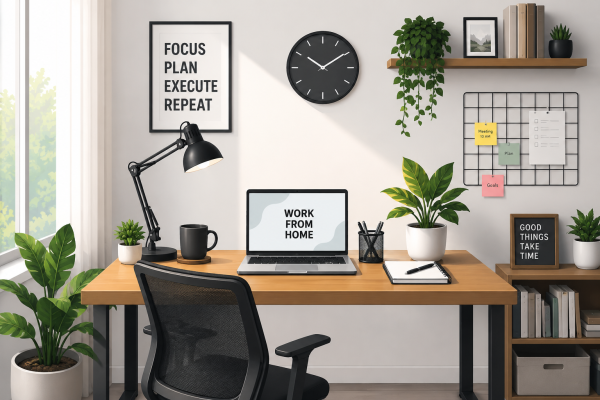
An untidy desk often leads to unnecessary distractions, reduced efficiency, and increased mental fatigue. Maintaining a clean workspace encourages better focus and supports a more systematic approach to daily responsibilities.
Professionals should regularly remove unused papers, organize stationery, arrange charging cables neatly, and dispose of unnecessary items that accumulate over time. A habit of cleaning the workspace at the end of each working day helps maintain order and creates a fresh environment for the following day.
Lighting significantly affects both physical comfort and mental alertness during working hours.
Natural sunlight is generally regarded as the most beneficial source of illumination because it reduces eye strain, improves mood, and creates a pleasant working environment. Windows located in the eastern or northern direction allow natural light to enter during the day and are therefore considered favorable.
Where natural light is limited, adequate artificial lighting should be provided to maintain proper visibility without causing glare or discomfort.
Colour psychology and Vastu principles both recognize the influence of colours on human emotions and work performance.
Light shades such as white, beige, cream, light green, pale blue, and soft yellow contribute to a calm and balanced environment. These colours help create an atmosphere that supports concentration, creativity, and mental clarity.
Excessively dark colours may make the workspace appear smaller and less energetic, particularly when natural lighting is limited.
Modern work-from-home professionals depend heavily on electronic devices including laptops, desktop computers, printers, Wi-Fi routers, monitors, and charging equipment.
According to Vastu, the south-eastern part of the workspace is generally considered appropriate for electronic appliances because it is traditionally associated with the fire element.
Regardless of the direction, electronic equipment should be properly organized. Loose wires, tangled cables, and unnecessary gadgets create visual clutter and reduce the overall efficiency of the workspace.
Indoor plants contribute to a pleasant and refreshing work environment while also improving the visual appearance of the home office.
Healthy plants symbolize growth and vitality. Commonly preferred plants include Money Plant, Bamboo Plant, Snake Plant, Peace Lily, and Areca Palm. These plants require relatively little maintenance while enhancing the overall atmosphere of the workspace.
Plants that are dry, damaged, or unhealthy should be replaced promptly, as they may negatively affect the appearance of the office.
Decorative items should support motivation without creating unnecessary distractions.
Professionals often choose to display certificates, awards, motivational quotations, vision boards, or carefully selected artwork that reflects their career goals. Such items contribute to a positive working atmosphere and encourage confidence during daily professional activities.
Broken decorative objects or damaged furniture should be repaired or removed, as they reduce both the visual appeal and functionality of the workspace.
Many professionals unknowingly create work environments that reduce productivity.
Some frequently observed mistakes include:
✔ Working from the bed on a regular basis
✔ Keeping excessive clutter on the desk
✔ Using poor lighting
✔ Sitting with the back towards the entrance
✔ Working in dark or poorly ventilated rooms
✔ Allowing electronic cables to remain disorganized
✔ Placing unnecessary decorative items around the workstation
Correcting these issues often results in a cleaner, more efficient, and more comfortable workspace.
As remote working continues to become a permanent part of professional life, creating an efficient home office has become increasingly important. Vastu Shastra provides practical guidelines that help individuals organize their workspace in a manner that promotes concentration, discipline, and mental well-being.
Simple changes such as selecting an appropriate seating direction, maintaining cleanliness, improving lighting, organizing electronic equipment, and reducing clutter can significantly improve the overall working environment. While professional success ultimately depends on dedication, continuous learning, and consistent performance, a well-planned workspace can serve as a valuable foundation for achieving long-term career goals.
By following these Vastu principles, work-from-home professionals can create a workspace that supports both productivity and personal well-being.
Ready to align your space for health, harmony, and growth?
© 2025-2026 Vaastublessings • All Rights Reserved. Designed by Esuccess Academy