

Buying a new home is one of the biggest milestones in life. It is a decision that involves emotions, financial planning, and long-term aspirations. Most home buyers focus on factors such as location, budget, amenities, connectivity, and future appreciation. While these factors are undoubtedly important, many people also consider Vastu Shastra before finalizing a property. A home is not just a physical structure; it is a space where families grow, relationships develop, and memories are created. According to Vastu Shastra, the energy of a home can influence the well-being, success, and happiness of its occupants.
Vastu Shastra is an ancient Indian science of architecture and design that aims to create harmony between human beings and nature. It is based on the balance of the five elements—Earth, Water, Fire, Air, and Space. When these elements are aligned correctly within a property, they are believed to create a positive environment that supports health, prosperity, and peace. For new home buyers, understanding basic Vastu principles can help in selecting a property that feels balanced, comfortable, and supportive of long-term goals.
Many people think about Vastu only after moving into a property. However, experienced Vastu consultants often recommend evaluating a property before making the purchase. Certain structural aspects such as plot shape, entrance direction, room placement, and overall layout cannot be changed easily once the property is acquired.

A Vastu-compliant home is believed to support better relationships, improved financial stability, mental peace, and overall growth. While Vastu should not be the sole factor in property selection, it can serve as an additional layer of evaluation when comparing multiple options. Buyers often find greater confidence in their decision when a property aligns with both practical requirements and Vastu principles.
One of the fundamental concepts of Vastu Shastra is the significance of directions. Each direction is associated with a specific type of energy and natural element. The North direction is linked with opportunities and financial growth, while the East is associated with sunlight, positivity, and new beginnings. The South-East direction represents the Fire element and is considered suitable for activities related to cooking and energy generation. The South-West is associated with stability and is often recommended for the master bedroom.
When evaluating a property, understanding how rooms are positioned in relation to these directions can provide valuable insights into the overall energy balance of the home.
The shape of a property plays an important role in Vastu evaluation. Square and rectangular plots are generally considered the most favorable because they promote balanced energy distribution. These shapes allow for practical room layouts and create a sense of stability within the property.
Irregular plots, triangular layouts, or properties with missing corners may create energy imbalances according to Vastu principles. While modern urban developments often present layout challenges, buyers should ideally choose properties with regular and proportionate shapes whenever possible.
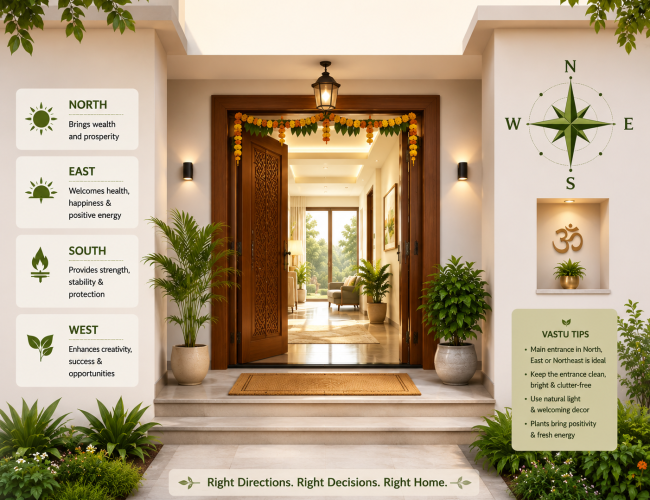
The main entrance is one of the most important aspects of any property. According to Vastu, it acts as the primary entry point for energy into the home. A well-positioned entrance can contribute to a positive atmosphere and support the overall well-being of the residents.
North, East, and North-East-facing entrances are generally considered favorable because they are associated with prosperity, growth, and positive opportunities. The entrance area should remain clean, well-lit, and free from clutter. A welcoming entrance creates a positive first impression while encouraging the smooth flow of beneficial energy.
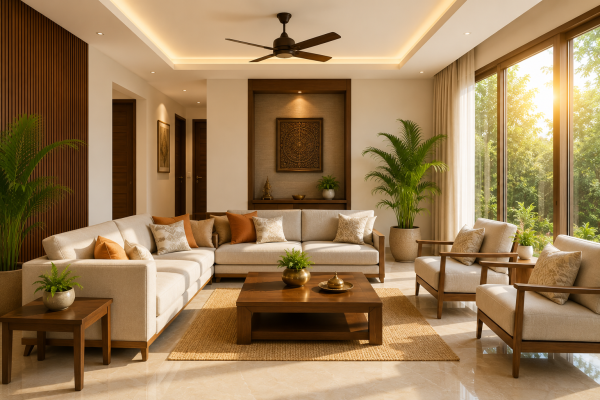
The living room serves as the social center of a home where family members gather and guests are welcomed. According to Vastu principles, the living room is ideally located in the North, East, or North-East section of the property.
These directions help maintain a bright and open environment. Natural sunlight and proper ventilation contribute significantly to the overall energy of the space. Furniture should be arranged in a way that supports easy movement and creates a comfortable setting for interaction and relaxation.
The kitchen represents nourishment, health, and family well-being. Since cooking involves fire, Vastu associates the kitchen with the Fire element. For this reason, the South-East direction is traditionally considered the most suitable location for a kitchen.
If a South-East kitchen is not possible, the North-West direction is generally accepted as an alternative. The cooking platform should ideally allow the person cooking to face East. Proper ventilation, cleanliness, and organization further support the positive energy of the kitchen space.
The master bedroom plays a key role in personal well-being and family harmony. Vastu experts often recommend the South-West direction for the master bedroom because it is associated with stability, security, and long-term growth.
Bedrooms should promote relaxation and comfort. Excessive clutter, poor ventilation, and unnecessary electronic devices can disrupt the peaceful atmosphere. Creating a balanced and organized bedroom environment contributes to better rest and overall well-being.
A child’s room should encourage learning, creativity, and personal development. According to Vastu principles, the West, North-West, and East directions are generally suitable for children’s bedrooms.
Study tables should ideally be placed so that children face East or North while studying. These directions are believed to support concentration and mental clarity. Adequate lighting and a clutter-free study environment further enhance focus and productivity.
Bathrooms and toilets are essential components of every modern home. Vastu recommends placing them in the West or North-West portions of the property. Proper drainage systems and good ventilation are particularly important in these areas.
Water leakage, dampness, and poor maintenance can affect both the physical condition of the property and the overall energy environment. Buyers should inspect these areas carefully before finalizing a property purchase.
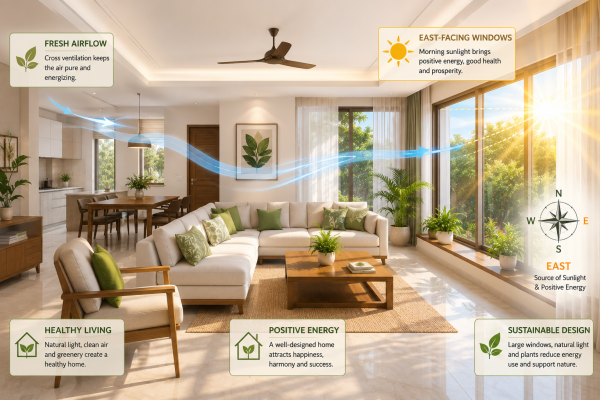
One aspect of Vastu that aligns strongly with modern architectural principles is the emphasis on natural light and airflow. Homes that receive ample sunlight tend to feel healthier, brighter, and more inviting.
The North and East sides of a property should ideally allow natural light to enter throughout the day. Good ventilation promotes air circulation, reduces humidity, and creates a refreshing indoor environment. These practical benefits also support the Vastu goal of maintaining positive energy within the home.
Balconies, terraces, and open spaces contribute significantly to the overall quality of a home. North, East, and North-East-facing balconies are generally considered favorable because they allow fresh air and natural sunlight to enter the property.
Open spaces should remain clean and organized. Incorporating healthy plants and comfortable seating areas can enhance the visual appeal and create a pleasant environment for relaxation.
Many buyers focus entirely on aesthetics and overlook practical Vastu considerations. One common mistake is selecting a property based solely on price or amenities without evaluating the layout and direction. Another mistake is ignoring the placement of key rooms such as the kitchen, master bedroom, and entrance.
Some buyers also assume that every Vastu issue is serious. In reality, many minor imbalances can be addressed through practical remedies and adjustments. The objective should be to choose a property with strong overall Vastu compliance rather than expecting absolute perfection.
Buying a home is a long-term investment that impacts every aspect of life. While factors such as budget, location, and amenities remain important, Vastu Shastra provides an additional framework for evaluating the overall suitability of a property. A home that supports natural light, proper ventilation, balanced room placement, and positive energy can contribute to greater comfort and peace of mind.
For new home buyers, understanding Vastu principles before making a purchase can help avoid common mistakes and support a more informed decision-making process. The goal is not to find a perfect property but to choose a home that aligns with both practical needs and positive living conditions.
Ready to align your space for health, harmony, and growth?
© 2025-2026 Vaastublessings • All Rights Reserved. Designed by Esuccess Academy