
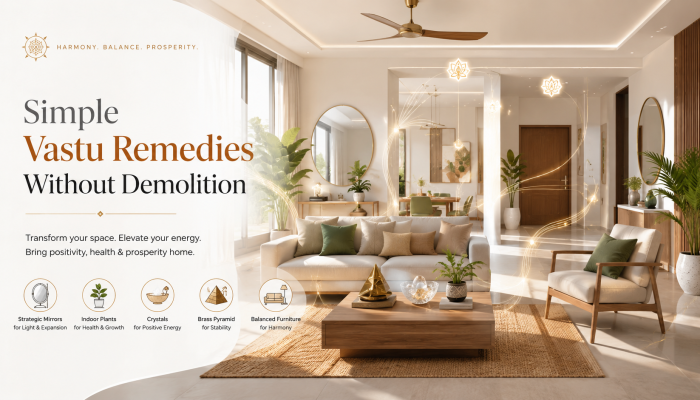
Vastu Shastra is an ancient Indian architectural science that focuses on creating harmony between people and their living or working spaces. It is based on the balance of the five natural elements – Earth, Water, Fire, Air, and Space – and their influence on the environment.
Many people believe that correcting Vastu defects requires expensive renovations, breaking walls, relocating rooms, or making major structural changes. However, this is a common misconception. In modern apartments, independent houses, and commercial buildings, structural modifications are often impractical due to construction limitations, legal restrictions, or financial considerations.
Fortunately, Vastu Shastra also recommends several non-demolition remedies that help improve the balance of energy without altering the building’s structure. These remedies focus on cleanliness, organization, lighting, furniture arrangement, colors, natural elements, and proper utilization of space.
This article explains the concept of simple Vastu remedies without demolition, their importance, and the various methods that can be adopted to improve the overall energy of a property.
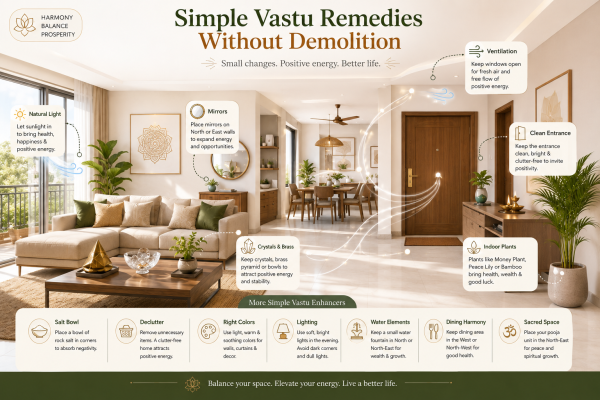
Many people believe that correcting Vastu defects means breaking walls, shifting rooms, or making expensive structural changes. In reality, that isn’t always necessary. Modern Vastu practices recognize that not every property can be redesigned, especially apartments, rented homes, and commercial spaces with fixed layouts.
Non-demolition Vastu remedies are practical solutions that improve the overall balance and harmony of a property without altering its structure. Instead of focusing on reconstruction, these remedies emphasize optimizing the existing space through better organization, proper placement of furniture, improved lighting, ventilation, colors, natural elements, and regular maintenance.
The idea is to create an environment that feels more peaceful, functional, and welcoming while working within the limitations of the property’s current design.
These remedies are also cost-effective, easy to implement, and suitable for people who want to follow Vastu principles without investing in major renovations.
✅ Apartments and flats with fixed layouts
✅ Rented houses where structural changes are not allowed
✅ Commercial offices and corporate workspaces
✅ Existing residential buildings that cannot be renovated
✅ Shops, showrooms, and retail spaces
✅ Villas and independent homes where demolition is not preferred
✅ Newly purchased homes that need simple Vastu corrections
✅ Properties where renovation is expensive or not feasible
With rapid urban development, the way homes are designed today is very different from traditional architectural practices. Apartments, high-rise buildings, gated communities, and compact homes are usually planned based on available land, construction regulations, and space optimization rather than Vastu principles. As a result, many homeowners discover that certain areas of their property may not align with traditional Vastu recommendations.
Some of the most common concerns include:
✔ Main entrance facing an unfavorable direction
✔ Kitchen located in a different zone than traditionally recommended
✔ Toilet positioned in the North-East corner
✔ Bedrooms not aligned with preferred directions
✔ Missing corners or irregularly shaped layouts in apartments
✔ Limited natural sunlight entering the home
✔ Poor ventilation and restricted airflow
✔ Excessive clutter reducing the functionality of spaces
✔ Improper furniture placement affecting movement within rooms
Finding one or more of these issues in your home does not necessarily mean your property is “bad” or that you need to spend a significant amount on renovations. In fact, these layout challenges are quite common in modern homes because builders and architects often have to work within practical constraints such as plot size, building regulations, structural design, and customer requirements.
This is especially true for apartment owners and people living in rented properties, where making structural modifications is either impossible or prohibited. Even independent homes may have limitations that make major reconstruction expensive and inconvenient.
The objective is not to create a “perfect” Vastu-compliant home but to make the existing space more comfortable, organized, functional, and harmonious without unnecessary structural changes.
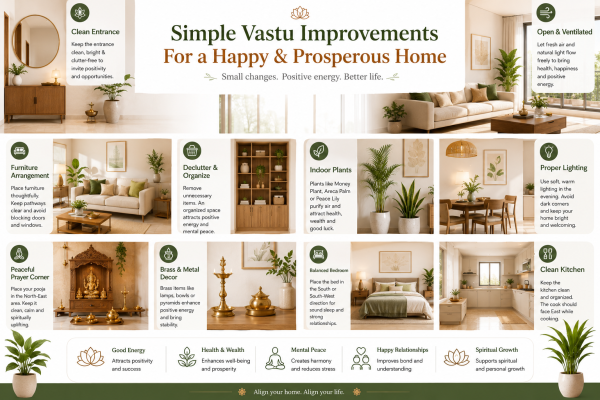
1. Keep Your Home Clean and Clutter-Free: One of the simplest yet most effective Vastu remedies is maintaining cleanliness.
A cluttered home not only looks untidy but also makes spaces feel cramped and stressful.
Focus on cleaning these areas regularly:
Benefits
Tip: If you haven’t used something for over a year, consider donating or recycling it.
2. Allow More Natural Sunlight: Natural sunlight makes a home brighter, healthier, and more welcoming.
Simple ways to increase sunlight include:
Why it matters: Bright spaces often feel more spacious, cheerful, and comfortable to live in.
3. Improve Air Circulation: Fresh air is essential for a healthy indoor environment.
You can improve ventilation by:
Proper airflow also helps reduce moisture and unpleasant odors.
4. Rearrange Your Furniture: Sometimes, simply moving furniture can make a room feel more balanced.
Good practices include:
A well-arranged room feels larger and more organized.
5. Add Healthy Indoor Plants: Plants bring freshness and improve the overall appearance of your home.
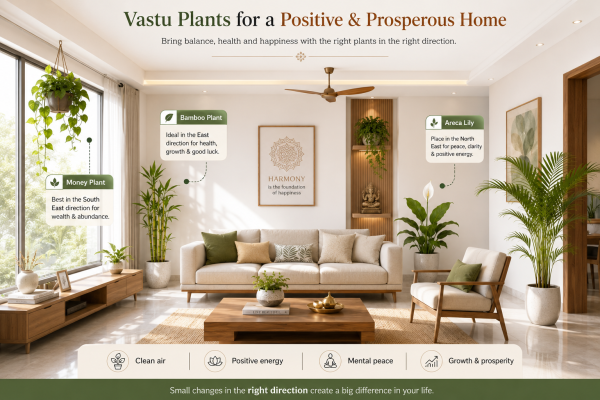
Some commonly preferred indoor plants include:
Remember
Healthy plants contribute to a pleasant indoor environment.
6. Use Light and Pleasant Colors: Colors influence how a room feels.
Soft shades usually create a calm and spacious atmosphere.
Room | Recommended Colors |
Living Room | White, Cream, Beige |
Bedroom | Light Blue, Soft Green |
Study Room | Light Yellow |
Prayer Room | White |
Office | Grey, White |
Avoid making every room too dark, especially if natural light is limited.
7. Keep Your Main Entrance Attractive: The entrance is the first thing anyone notices.
Simple improvements include:
A welcoming entrance improves both appearance and functionality.
8. Place Mirrors Carefully: Mirrors help reflect light and make rooms appear larger.
Some simple guidelines are:
Proper mirror placement can make smaller rooms feel brighter.
Examples include:
These items also add elegance to modern interiors.
10. Create a Peaceful Prayer or Meditation Corner: Every home benefits from a quiet place where family members can relax, pray, or meditate.
You don’t need a separate room.
Even a small, clean corner with:
can create a calm atmosphere.
11. Repair Broken or Damaged Items: Many people ignore small repairs around the house.
However, broken objects can make a home look neglected.
Check for:
Regular maintenance keeps your home looking fresh and functional.
12. Organize Storage Spaces: Messy cupboards and overflowing storage areas create unnecessary stress.
Organize regularly by:
An organized home is easier to manage and maintain.
Simple Vastu remedies without demolition provide a practical approach for homeowners, apartment residents, and business owners who wish to improve their living or working environment without undertaking costly renovations. By focusing on cleanliness, natural lighting, ventilation, furniture placement, color selection, indoor plants, and organized spaces, it is possible to create a more balanced and comfortable atmosphere while preserving the property’s existing structure.
Although these remedies are easy to implement, they should be viewed as supportive measures rather than universal solutions. Since every property has unique characteristics, professional guidance remains the most reliable way to identify suitable Vastu corrections. Combining practical improvements with expert advice helps ensure that recommendations align with both traditional Vastu principles and the realities of modern construction.
Ready to align your space for health, harmony, and growth?
© 2025-2026 Vaastublessings • All Rights Reserved. Designed by Esuccess Academy