
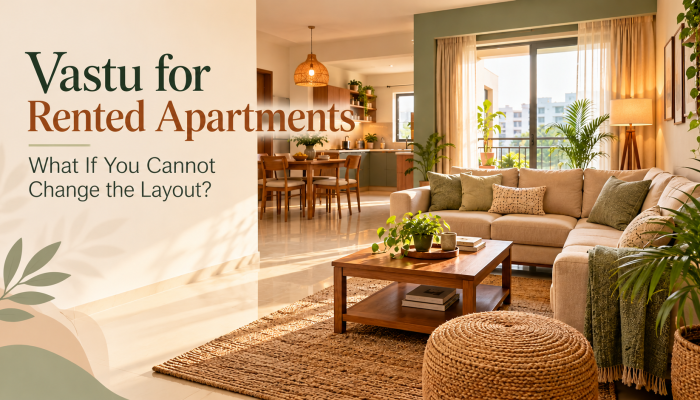
Moving into a rented apartment often means making the best of a space that someone else has designed. You may like the location, rent, and overall appearance of the flat, but the kitchen might be in an unfavourable direction according to Vastu Shastra, the main entrance may not be ideally positioned, or your bedroom layout may not match traditional Vastu recommendations.
For tenants, these concerns can be difficult to address. Unlike homeowners, renters usually cannot move walls, change the position of a kitchen, relocate a bathroom, or make major structural alterations.
The good news is that following Vastu principles does not always require expensive renovations. You can begin by arranging furniture thoughtfully, improving natural light and ventilation, keeping your surroundings organised, and making small adjustments that suit the existing layout.
If you are wondering how to apply Vastu for rented apartments without changing the layout, here are some practical suggestions to consider.
Before rearranging your belongings, take some time to understand the apartment’s layout. Identify the main entrance, bedrooms, kitchen, bathrooms, windows, and available natural light.
Traditional Vastu Shastra considers directions, room placement, and the relationship between different areas of a home. Understanding these elements can help you decide which adjustments are practical within your rental property.
For example, you may not be able to change the kitchen’s location, but you might be able to adjust the cooking position, organise the storage, or improve ventilation.
Similarly, if the bedroom is not ideally positioned according to traditional recommendations, you can still pay attention to bed placement, lighting, and the overall arrangement of the room.
The aim is to work with the apartment you have rather than attempting changes that are not permitted by your landlord.
The main entrance is an important consideration in Vastu Shastra because it represents the point through which people enter the home.
In a rented apartment, changing the entrance direction is rarely possible. However, you can pay attention to the condition and appearance of the entrance.
Keep the doorway clean, ensure the door opens and closes properly, and avoid allowing shoes, delivery boxes, or unused items to accumulate around the entrance.
Good lighting can make the entryway feel more welcoming. A small shoe cabinet, a simple doormat, or a suitable decorative element can also help create an organised appearance.
If the entrance opens into a narrow passage, avoid overcrowding it with furniture or decorative objects.
Practical tip: Focus on cleanliness, accessibility, and a pleasant first impression instead of worrying about changes you cannot make to the entrance itself.
The bedroom is one of the most important spaces to consider because it is where you rest and recover after a busy day.
According to traditional Vastu recommendations, the southwest is often preferred for the master bedroom. However, tenants may have little control over which room is available for sleeping.
If your bedroom is located elsewhere, you can still consider the placement of your bed and furniture.
Where the room layout permits, traditional Vastu guidance generally recommends positioning the bed so that your head points towards the south or east while sleeping. Avoid placing the bed directly under a heavy overhead beam where a more comfortable arrangement is possible.
Keep enough space around the bed for easy movement, and avoid filling the room with unnecessary furniture.
Choose calming colours, maintain clean bedding, and limit clutter around the sleeping area. Curtains that allow you to control daylight can also help create a comfortable environment.
Remember that these are traditional Vastu suggestions rather than scientifically established rules for health or sleep.
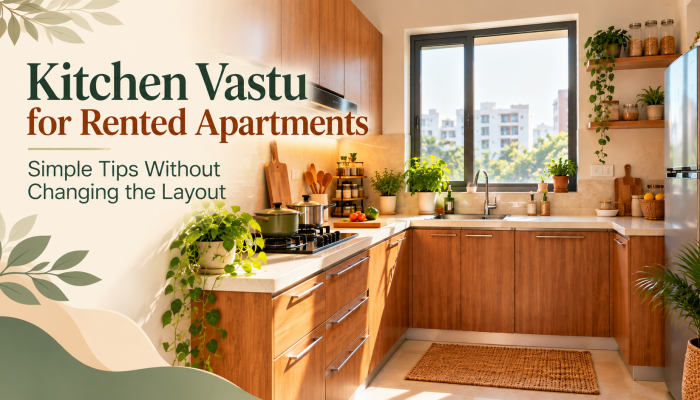
Kitchen placement is a common concern among people looking for Vastu advice for rented homes.
Traditional Vastu Shastra generally associates the southeast with the kitchen and the fire element. The northwest is also considered an alternative in some interpretations.
However, relocating a kitchen in a rented apartment is usually impractical. Plumbing, electrical connections, gas lines, and safety requirements make such changes complicated and potentially expensive.
Instead, consider adjustments that do not affect the existing structure.
You do not need to purchase expensive Vastu products or undertake major alterations simply because your kitchen does not occupy the traditionally preferred direction.
A clean, functional, and safely maintained kitchen should remain your priority.
Natural light and ventilation are important practical considerations in any home, regardless of its layout.
Traditional Vastu principles also place importance on light, openness, and the condition of the living environment.
If your apartment receives limited sunlight, open the curtains during daylight hours whenever privacy and weather conditions permit. Keep windows unobstructed where possible, and make sure ventilation systems work properly.
Avoid blocking windows with tall cupboards or bulky furniture unless necessary.
You can also make a small apartment feel more open by reducing unnecessary belongings and choosing furniture that suits the available space.
Mirrors may help a room appear larger when positioned thoughtfully. In traditional Vastu interpretations, mirror placement is also considered in relation to direction and what the mirror reflects. If you follow these principles, consider placing mirrors on north or east walls and avoid south or west walls.
Most importantly, do not compromise safety or privacy simply to follow a particular placement recommendation.
Decorative changes are among the easiest ways to adapt a rented apartment without making permanent modifications.
Traditional Vastu advice often favours light, balanced colours for living spaces. Soft white, cream, beige, pale yellow, and gentle green can work well in many interiors, depending on the available natural light and your personal preferences.
You can introduce these colours through curtains, cushions, bedsheets, rugs, lampshades, and removable wall decorations.
Keep the decor balanced rather than overcrowding shelves and walls. Plants can also bring a natural element into the home, provided they receive suitable light and are appropriate for the available space.
There is no need to repaint every room or replace existing furniture. Small, reversible changes are often sufficient to make a rented apartment feel more personal and comfortable.
Bathroom and toilet placement can be another concern when assessing a rental property through Vastu Shastra.
Because these spaces are usually fixed, relocating them is rarely a realistic option. Instead, pay attention to their condition and maintenance.
Keep the bathroom clean, address water leaks promptly, and ensure that exhaust fans or windows provide adequate ventilation. Close the toilet lid when appropriate, and avoid allowing damp towels or unused items to accumulate.
Keep bathroom doors closed when they are not in use if this suits the layout and ventilation requirements.
These steps are sensible household practices that help maintain hygiene and comfort. They do not guarantee any particular financial, personal, or spiritual outcome, but they can contribute to a better living environment.
One of the biggest mistakes tenants can make is assuming that every Vastu concern requires a costly remedy.
You may come across suggestions involving structural demolition, specialised installations, or expensive decorative products. Before considering any such recommendation, assess whether the proposed change is necessary, practical, and permitted by your landlord.
In many situations, you can begin with simple measures:
If you consult a Vastu professional, explain your limitations from the beginning. A useful assessment should take the existing floor plan, rental restrictions, budget, and everyday needs into account.
You should not feel pressured to make expensive purchases or structural changes to address every traditional Vastu concern.
Not necessarily.
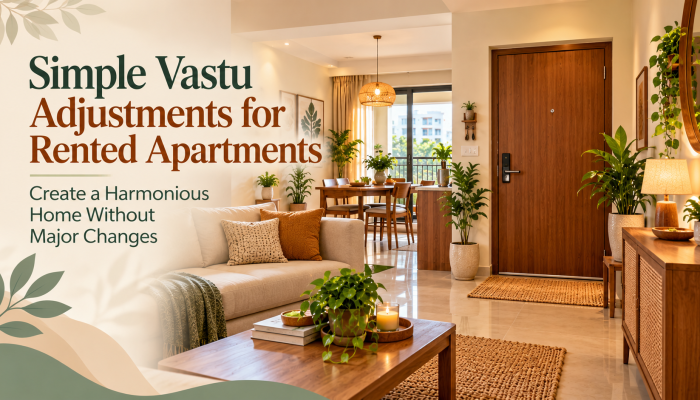
When choosing a rental apartment, Vastu may be one of several factors you consider, alongside affordability, location, safety, ventilation, water supply, maintenance, and access to work or education.
If you have not yet finalised a property, you can compare the available layouts and identify which one best matches your preferences.
However, if you already live in a flat that does not meet every traditional Vastu recommendation, that does not mean you must move out.
A home’s suitability also depends on how comfortably you can live in it, maintain it, and use the available space.
Rather than focusing entirely on perceived directional defects, consider what can reasonably be improved without disrupting your daily life or exceeding your budget.
Following Vastu principles in a rented apartment is possible even when you cannot change the existing layout. The key is to understand the space, identify practical adjustments, and avoid worrying about structural changes that are outside your control.
From arranging furniture and improving natural light to maintaining a clean entrance and choosing suitable decor, small changes can make your apartment more organised and comfortable.
Traditional Vastu Shastra offers guidance on directions, room arrangements, and the use of space. However, every rental property comes with its own limitations, and the most appropriate approach is one that respects those limitations while meeting your everyday needs.
If you would like guidance tailored to your apartment, consulting an experienced Vastu professional can help you understand the existing layout and explore practical options before making any changes.
Ready to align your space for health, harmony, and growth?
© 2025-2026 Vaastublessings • All Rights Reserved. Designed by Esuccess Academy