
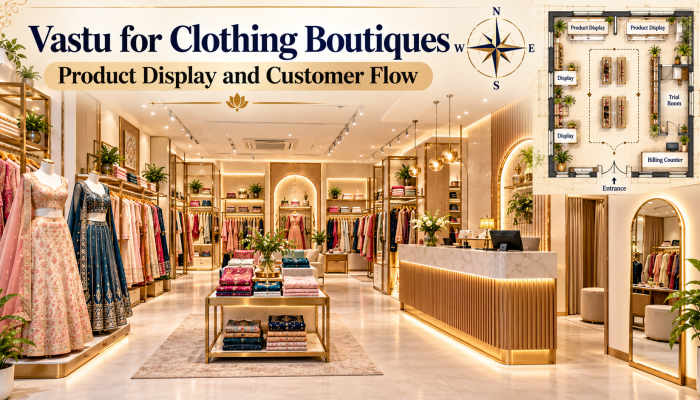
A clothing boutique is not just a place to sell garments. It is a space where customers explore styles, compare colours, try outfits, and decide what suits them best. The way clothes are displayed, how easily customers move between sections, and the overall atmosphere of the store can influence their shopping experience.
When planning a boutique, many owners also consider Vastu Shastra, the traditional Indian system of architecture and spatial planning. Vastu offers guidelines for choosing directions and arranging different areas of a commercial space, including the entrance, billing counter, trial rooms, storage, and product displays.
Vastu for clothing boutiques focuses on the placement of different functional areas while maintaining a comfortable and organised shopping environment. Although Vastu is a traditional belief system and does not guarantee business success, its principles can be considered alongside practical retail design.
Here are some important Vastu considerations for planning a clothing boutique.
The entrance creates the first impression of your boutique. According to traditional Vastu guidelines, north, east, and certain northeast entrance locations are often considered favourable for commercial properties. The suitability of a particular entrance depends on the property’s orientation and the specific Vastu method being followed.
Keep the entrance clean, bright, and free from unnecessary obstacles. Avoid placing large garment racks, mannequins, or promotional stands directly in front of the doorway, as they can make entry difficult.
For a boutique, the entrance display should communicate the store’s style immediately. A carefully dressed mannequin, a seasonal collection, or a small arrangement of featured garments can attract attention without blocking the customer’s path.
Practical tip: Make sure the entrance is wide enough for comfortable movement and accessible to customers with different mobility needs.
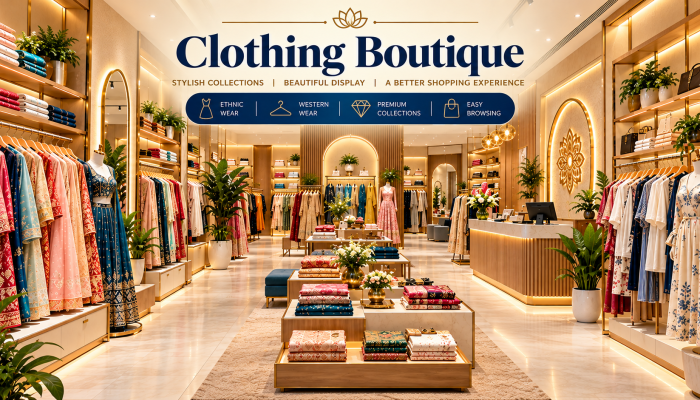
Product displays play an important role in how customers explore a clothing boutique. Garments should be arranged so that shoppers can easily identify collections, compare styles, and find their preferred sizes.
In commonly followed Vastu practices, the north and east areas are often considered for lighter displays and open arrangements. These areas may be used for selected garments, new arrivals, or visually appealing collections when the layout permits.
Heavier display units and large storage cabinets are traditionally preferred towards the south or west in many Vastu-based layouts.
However, product placement should also reflect the type of boutique you operate. An ethnic-wear boutique may need dedicated sections for sarees and lehengas, while a western-wear store may require more hanging space and accessible shelving.
Keep enough space between racks so customers can browse without disturbing other garments.
One common challenge in clothing stores is overcrowding the available space with racks, tables, mannequins, and display stands.
Traditional Vastu planning generally favours keeping the central area relatively open. This approach also makes sense from a retail-design perspective because an unobstructed centre improves movement and helps customers see more of the store.
Avoid placing tall racks or bulky furniture in the middle as they interrupt the natural shopping path, weight element to Brahamsthan which is considered as a major flow as it disrupts overall energy of the premises. Instead, use a few carefully selected display tables or low-height stands.
A clear central walkway allows customers to move between collections without feeling restricted. It also gives the boutique a more spacious appearance, even when the floor area is limited.
The billing counter should be easy to locate without dominating the entrance or interrupting customer movement.
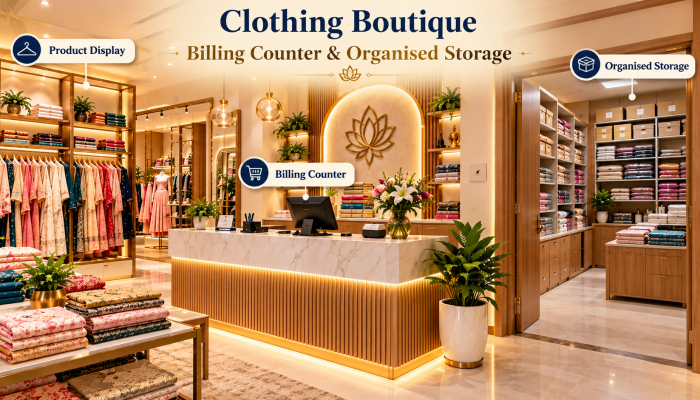
According to commonly followed Vastu guidelines, the north or southeast may be considered for a billing counter, depending on the overall layout and the direction of the property. The exact placement should be evaluated in the context of the complete floor plan.
Choose a location where staff can manage payments, packaging, customer queries, and returns efficiently. Keep the counter organised, with adequate space for the point-of-sale system, receipts, bags, and other essentials.
Avoid placing the counter where customers waiting to pay block the entrance or trial-room access.
A well-positioned billing counter supports a smoother checkout experience and makes staff movement more efficient.
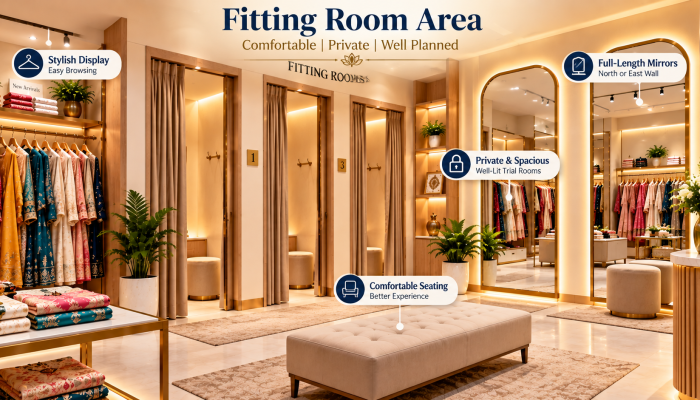
Trial rooms are particularly important in clothing boutiques because customers often need to check the fit, length, and appearance of garments before purchasing them.
In traditional Vastu planning, the placement of rooms may depend on the direction and use of each area. However NW is the best recommended location for the trail room. Full length mirror should be planned preferably on the north and east walls of the trail rooms
Regardless of direction, trial rooms should offer sufficient privacy, appropriate lighting, a full-length mirror, hooks, seating where possible, and enough room to change comfortably.
The entrance to a trial room should not open directly into a congested passage or expose customers to the main shopping area.
Practical tip: Use flattering but accurate lighting. Customers should be able to judge garment colours and fit without the lighting creating misleading effects.
Clothing boutiques need storage for additional sizes, seasonal stock, packaging materials, accessories, and garments that are not currently on display.
Traditional Vastu guidelines commonly suggest placing heavier storage units towards the south, southwest, or west. If the boutique has a separate stockroom, it can be organised to keep inventory out of the customer-facing area.
Store garments according to category, size, colour, and collection. Use labelled shelves or storage boxes so staff can locate items quickly.
Avoid allowing cartons and spare stock to accumulate near the entrance or in the central walkway. This can make the store look cluttered and create unnecessary safety hazards.
For boutiques with limited space, vertical shelving and well-designed cabinets can provide additional storage without taking up too much floor area.
Mirrors are essential in clothing boutiques because customers want to see how garments look before making a purchase.
According to the Vastu approach described here, mirrors should be placed on the north and east walls, while mirrors on the south and west walls should be avoided.
Plan mirror placement around practical needs, particularly near trial rooms and designated outfit-checking areas. Make sure mirrors are positioned at a comfortable height and provide a clear, undistorted reflection.
Lighting is equally important. A combination of ambient lighting and focused lights can highlight garment colours, fabric textures, and display details.
Avoid dark corners and harsh lighting that changes the perceived colour of clothing. Good lighting makes the boutique easier to navigate and helps customers assess products accurately.
Customer flow refers to the path shoppers follow as they enter, browse, try garments, and proceed to checkout.
A boutique should guide customers through the available collections without forcing them to follow a complicated route. The entrance, main walkway, display racks, trial rooms, and billing counter should work together as one functional layout.
Consider placing new arrivals or featured collections in visible locations. Keep frequently purchased items easy to find and avoid placing popular garments behind crowded displays.
From a Vastu perspective, a balanced and uncluttered layout is generally preferred. From a retail perspective, clear pathways and logical product categories make shopping more comfortable.
The objective is to create a space where customers can browse freely while staff can assist them without unnecessary interruptions.
A boutique’s atmosphere depends on more than its layout. Dusty shelves, disorganised garments, broken hangers, poor ventilation, and overflowing trial rooms can affect how customers perceive the store.
Keep displays tidy throughout the day and return garments to their proper sections after customers have browsed them. Ensure that the entrance, mirrors, trial rooms, and billing counter are cleaned regularly.
You can also use subtle fragrances, suitable background music, and coordinated colours to create an atmosphere that reflects your brand identity. These elements should remain comfortable rather than overpowering.
Traditional Vastu emphasises a clean and orderly environment, and these practices also support everyday store management.
Planning a clothing boutique according to Vastu Shastra involves considering the placement of the entrance, product displays, billing counter, trial rooms, mirrors, and storage areas. The aim is to create a layout that follows traditional directional preferences while remaining practical for customers and staff.
However, no single direction can guarantee increased sales or business growth. The quality of the garments, pricing, customer service, merchandising, location, and overall shopping experience remain important factors in retail performance.
If you are opening a new boutique or renovating an existing one, start with an accurate floor plan and assess the property’s orientation before finalising the layout. A thoughtful combination of Vastu considerations and sound retail planning can help you create a boutique that feels organised, welcoming, and easy to shop in.
Ready to align your space for health, harmony, and growth?
© 2025-2026 Vaastublessings • All Rights Reserved. Designed by Esuccess Academy