
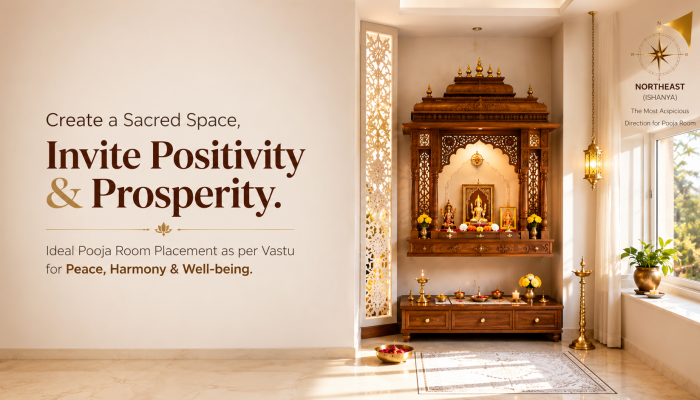
The pooja room is one of the most peaceful and spiritually important spaces in an Indian home. It is where family members pray, meditate, light diyas and begin the day with positive thoughts. According to Vastu Shastra, the placement of this space can influence the overall atmosphere of the home. While there are several traditional Vastu principles associated with a pooja room, the most important factors are its direction, cleanliness, ventilation, natural light and the way the idols are positioned.
If you are planning a new home or renovating your existing house, deciding the pooja room location at an early stage can make the space more comfortable and practical. Here is a detailed guide to the ideal pooja room placement as per Vastu Shastra.
According to traditional Vastu principles, the northeast direction, also known as Ishanya, is generally considered the most suitable location for a pooja room. This direction is traditionally associated with spiritual energy, clarity and a sense of peace.
A pooja room in the northeast can receive good natural light, particularly when the space has a suitable window or opening. However, the direction should not be considered in isolation. The overall layout of the house, entrances, room sizes, structural limitations and ventilation also need to be considered.
The east and north directions are also commonly considered suitable alternatives when a northeast pooja room is not possible.
In Vastu Shastra, the northeast corner holds a special position. Traditionally, it is considered a light and spiritually favourable zone of a property. This is one reason why many homeowners prefer to keep the pooja area in this part of the house.
A northeast pooja room can also be designed to receive morning sunlight. Natural light can make the room feel fresh and calm, while proper ventilation helps prevent the space from becoming damp or stuffy.
That said, Vastu is a scientifically driven study but it has a traditional approach as well. Homeowners can use these principles as cultural and design guidance while also considering practical requirements.
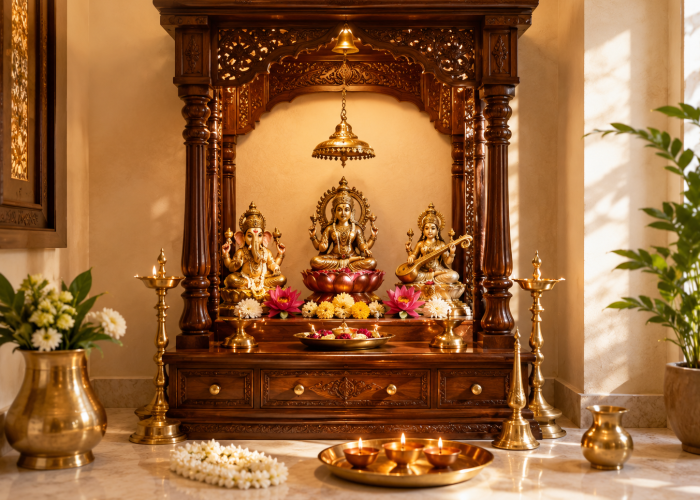
The direction in which idols are placed is another important consideration.
Traditionally, idols are often positioned so that the person praying can face east or north while offering prayers. The exact arrangement may vary depending on the deity, family traditions and available space.
It is generally better to avoid overcrowding the pooja room with too many idols, decorative objects or unrelated items as that can negatively impact the focus and concentration of the person praying. Keeping the arrangement simple makes the space easier to clean and maintains a calm appearance.
The idols should also be placed on a proper platform or dedicated unit rather than directly on the floor.
For independent houses, apartments and flats, the ideal location may differ depending on the floor plan.
A dedicated pooja room in the northeast is traditionally preferred. If a separate room is not possible, a small pooja corner can be created in a suitable area of the living room or another clean and quiet space.
The pooja area should ideally be away from places that generate excessive noise or movement. It is also practical to keep it away from areas where footwear, cleaning supplies or household waste are stored.
For apartments, following Vastu principles may require compromises because structural changes are often not practical. In such cases, focus on creating a clean, well-ventilated and peaceful prayer space in the most suitable available location.
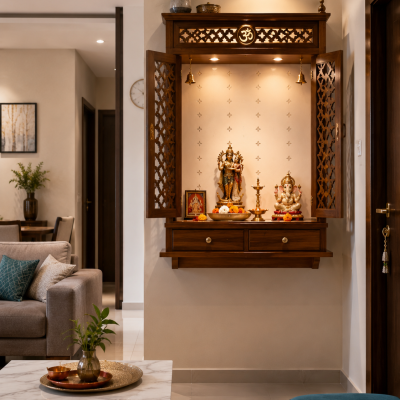
Modern apartments often have limited space, so creating a separate pooja room may not always be possible. A compact pooja unit, wall-mounted temple or dedicated corner can be an effective alternative.
If possible, choose a location towards the northeast, east or north. The unit should not interfere with regular movement through the house.
Before finalising the location, also check practical factors such as electrical points, ventilation, natural light, storage and ease of cleaning. A beautiful pooja unit is useful only when it works well with the rest of the home’s layout.
The Pooja unit should be positioned at a comfortable height so that they can be seen and worshipped without difficulty.
A dedicated wooden or stone platform can help create a defined prayer space. The exact height of the pooja units can depend on its design and the height of family members. The height of the idol should not be beyond 9 inches excluding Asan and Chatra.
Avoid placing idols in awkward positions where they are difficult to clean or where household objects are constantly kept around them.
A few practical and traditional considerations can help maintain the sanctity and cleanliness of the space.
Avoid using the pooja area as additional storage. Shoes, bags, laundry, cleaning materials and miscellaneous household items should not be kept around the prayer space.
It is also better to avoid creating a cluttered arrangement of idols, photographs and decorative objects. Excessive decoration can make cleaning difficult and reduce the peaceful character of the room.
The pooja room should ideally have adequate ventilation. If diyas or incense are regularly used, proper airflow becomes even more important.
Traditionally, placing a pooja room directly under a staircase is strictly avoided in Vastu recommendations as it is inauspicious to walk over the mandir or god idol. The area beneath stairs is often used for storage or other functional purposes rather than prayer.
If your home already has a pooja space under a staircase, there is no need to panic. The practical approach is to assess the available alternatives and, where possible, relocate the prayer space to a cleaner and more suitable location.
Light and soothing shades are generally preferred for pooja rooms. White, cream, light yellow, beige and soft earthy shades can create a calm visual environment.
The choice of colour should also complement the rest of the home’s interiors. A small pooja room does not necessarily need elaborate decoration. Simple finishes, warm lighting and natural materials can create an inviting atmosphere.
Regardless of its direction, cleanliness is one of the most important aspects of maintaining a pooja room.
Regularly clean the floor, shelves, idols, lamps and surrounding surfaces. Replace old flowers and dispose of them appropriately. Keep the area free from dust and unnecessary objects.
A clean prayer space is not only consistent with traditional practices but also makes the room more pleasant for everyday use.
The northeast direction is traditionally considered the ideal placement for a pooja room according to Vastu Shastra, with east and north often considered suitable alternatives. However, the best arrangement depends on the complete layout of the property.
A good pooja room should feel peaceful, clean, accessible and comfortable for daily prayer. Directional principles can be considered alongside practical factors such as ventilation, natural light, available space and family requirements.
If you are constructing a new house, it is worth planning the pooja room location before finalising the floor plan. For an existing home, even a small, thoughtfully designed prayer corner can create a dedicated space for worship without requiring major structural changes.
Ready to align your space for health, harmony, and growth?
© 2025-2026 Vaastublessings • All Rights Reserved. Designed by Esuccess Academy